
Why Quartzite is the Right Stone for Your Countertops
I will forever adore marble as a countertop material, but some clients get squeamish about stains and chips over time. For those homeowners that insist on a hardier material but also want a natural stone (not engineered stone) then quartzite is an ideal material that offers beauty, durability, and practicality in a way few materials can match.
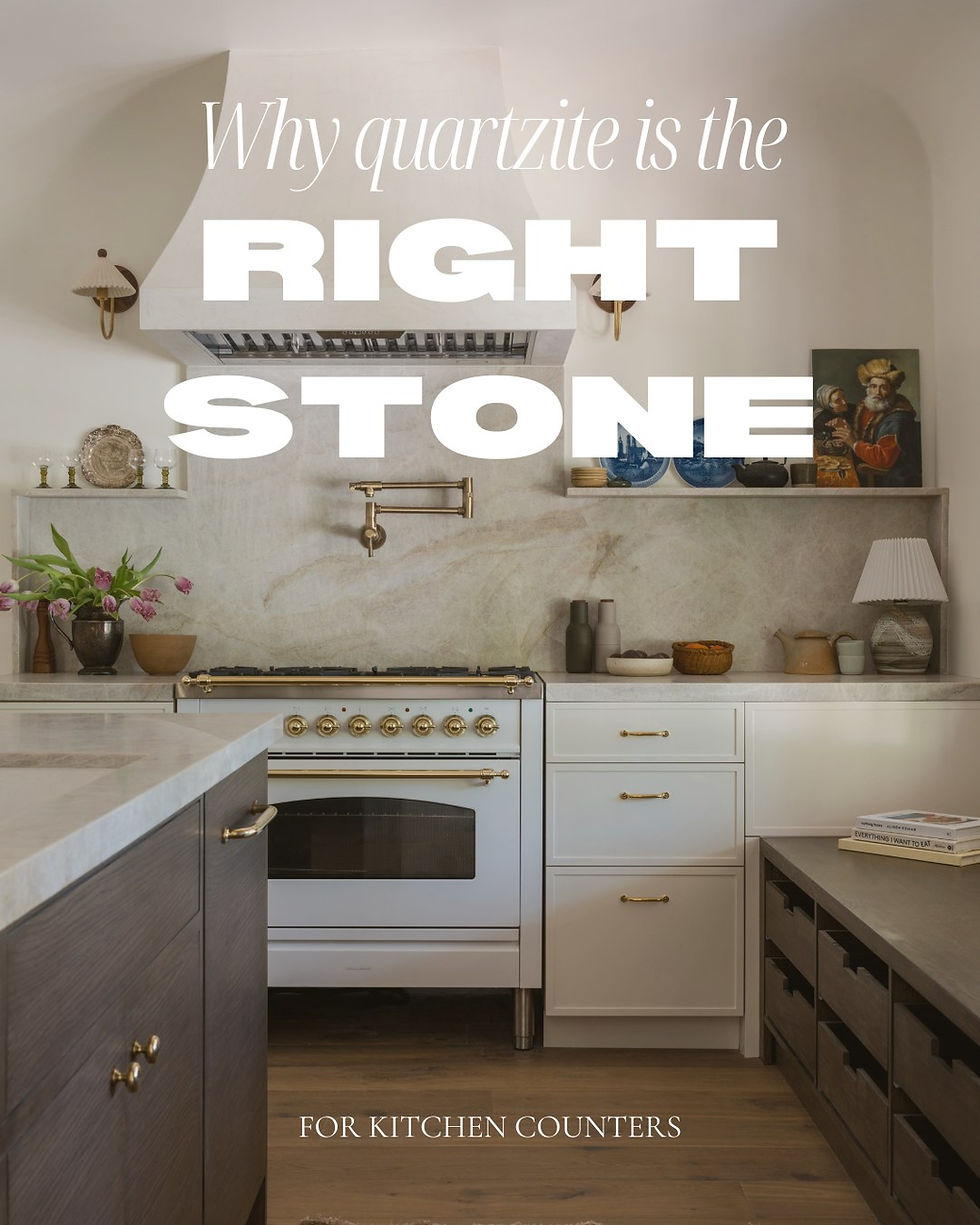
Quartzite is a natural stone formed from sandstone that has undergone intense heat and pressure. This process creates a material that is harder and more durable than many other natural stones, including marble. Unlike marble, quartzite does not etch easily from acidic substances like lemon juice or vinegar, which are common in kitchens.
Quartzite can withstand high temperatures without damage.
It is less porous than marble.
Quartzite offers a unique, natural look with a wide range of colors and patterns. Its crystalline structure often creates a sparkling effect that adds depth and elegance to any space.

I have had great success with quartzite in my installs, here are some of my favorite types:
Taj Mahal
A creamy beige background with rust and olive or gold veins. It works well as and with neutrals. This stone type is growing in popularity and therefore pricing as well.

Mont Blanc
A cool grey white background with blue grey veining doe sthe best job or looking like classic Italian marble. Bets for traditional style kitchens.

Sea Pearl
Features soft silver and gray waves that flow across the surface, creating a sense of movement and texture.

Fantasy Macaubus
It has a mix of gray, blue, and white tones with dramatic veining. It adds a cool, calming effect to interiors.

Quartzite offers a balance of natural beauty and toughness that few materials match, making it a smart choice for long-lasting countertops. It is durable but still requires some care to keep it looking its best:
Seal your countertops annually to prevent stains.
Clean spills immediately, especially oil or wine.
Use cutting boards to avoid dulling knives and protect the surface.
Avoid harsh chemicals or abrasive cleaners; mild soap and water work well.
Use trivets or hot pads for very hot cookware, even though quartzite is heat resistant.


The simple controls in Snow Rider make it accessible for beginners while still providing a challenge for experienced players.
Mình có lần lướt đọc mấy trao đổi trên mạng شيخ روحاني thì thấy nhắc nên cũng tò mò mở ra xem thử cho biết. Mình không tìm hiểu sâu جلب الحبيب chỉ xem qua trong thời gian ngắn để quan sát bố cục جلب الحبيب cách sắp xếp شيخ روحاني các mục và trình bày nội شيخ روحاني dung tổng thể. Cảm giác là các phần được trình bày khá gọn, các Berlinintim mục rõ ràng nên đọc lướt cũng không bị rối Berlinintim với mình như شيخ روحاني vậy là đủ để nắm tin cơ bản rồi. جلب الحبيب
👍
Have you considered comparing it to eggy car other stone options like granite or marble for a broader perspective? That could really help readers make an informed choice!
This was a helpful overview. Seeing real kitchen examples alongside the different quartzite varieties makes it much easier to That's Not My Neighbor choose a style that fits a home. Thanks for the useful advice!
it struck me how choosing a countertop involves balancing specs and aesthetics, a bit like analyzing the mechanics in an arcade game where every detail affects long-term performance.